Salesforce Has the Best GDPR Tooling of Any US Vendor, and Still Falls Short
Salesforce's GDPR feature set is genuinely impressive: DSARs, field encryption, EU residency, consent tracking. The problem is structural: Hyperforce EU doesn't override US jurisdiction, and the Slack/Tableau/MuleSoft acquisition sprawl complicates the picture further.
Tools mentioned

Salesforce is the largest CRM platform in the world. It handles sales pipelines, customer service, marketing automation, e-commerce, and analytics across industries from small business to Fortune 500. Many European enterprises use Salesforce as their primary customer data system.
The GDPR question is important because Salesforce holds more than contact records. For enterprise customers, it is often the system of record for every customer relationship, including support tickets, sales conversations, marketing engagement, and account history.
What Salesforce Gets Right
Salesforce has built extensive GDPR tooling since the regulation took effect:
- Data Processing Agreement (DPA) available for all customers, updated regularly
- EU data residency via the Salesforce Hyperforce infrastructure in multiple European regions
- Shield encryption for field-level encryption at rest (add-on product)
- Consent management built into the data model for tracking opt-in/opt-out status
- Data subject access request (DSAR) tools for responding to GDPR rights requests
- Right to be forgotten workflows that can purge personal data across Salesforce Clouds
- Audit trail for tracking who accessed or modified personal data
- Sub-processor transparency with a published list and notification system
Salesforce publishes a comprehensive Trust and Compliance Center documenting its GDPR approach, SOC certifications, ISO standards, and regional data residency options.
Where the Compliance Gaps Are
The feature set is strong. The structural jurisdiction issue remains.
US Jurisdiction and the CLOUD Act
Salesforce, Inc. is a publicly traded US company headquartered in San Francisco, California. Under the US CLOUD Act (2018), US authorities can compel any US company to produce data in its possession, custody, or control, regardless of where the data is physically stored.
This applies even if your Salesforce instance runs on Hyperforce infrastructure in Frankfurt or Paris. The data may sit on European servers, but the company controlling those servers answers to US law. A Data Processing Agreement between you and Salesforce cannot override US jurisdiction.
EU Data Residency Is Not Total Isolation
Salesforce's Hyperforce allows EU data residency for many core products, but:
- Not every Salesforce product supports Hyperforce EU residency
- Some data may still flow through US infrastructure for platform functions, support, or legacy features
- Salesforce-owned products acquired over time (MuleSoft, Slack, Tableau) have their own data flows
- Sub-processors used by Salesforce may include US-based companies
Before assuming your Salesforce data stays in the EU, review your specific products, integrations, and sub-processor list.
Data Privacy Framework Dependency
Where data does cross borders, Salesforce relies on the EU-US Data Privacy Framework (DPF) for transfers. The DPF was adopted in July 2023, but its predecessors (Safe Harbor and Privacy Shield) were both invalidated by the European Court of Justice.
The DPF faces ongoing legal uncertainty. In January 2025, the Trump administration dismissed three members of the Privacy and Civil Liberties Oversight Board (PCLOB), a key oversight body in the framework's structure. Legal challenges continue. If the DPF is invalidated, businesses relying on it for Salesforce data transfers would need alternative transfer mechanisms.
The Acquisition Question
Salesforce has acquired multiple companies over time: Tableau, MuleSoft, Slack, Quip, and others. When a company is acquired, its data handling practices can change, and sub-processor relationships are renegotiated. Enterprises using Salesforce's broader ecosystem should audit each product's specific compliance posture, not just Salesforce Sales Cloud.
For background on acquisition risk, see What Happens to Your Data If a Non-European SaaS Gets Sanctioned, Acquired, or Shut Down.
What This Means for Your Business
Using Salesforce is not illegal in Europe. Many EU enterprises use it with valid legal bases. But the compliance burden falls on you as the data controller.
If you continue using Salesforce:
- Enable Hyperforce EU residency for eligible products
- Sign the current DPA (available in Setup > Privacy Center)
- Deploy Shield encryption for highly sensitive fields if your tier supports it
- Document your Transfer Impact Assessment for data transfers
- Audit your sub-processors including acquired Salesforce properties
- Have a contingency plan in case the DPF is invalidated
If you want to eliminate jurisdiction risk entirely, European CRM platforms process all data under EU law without the structural exposure.
European Alternatives to Salesforce
Salesforce's feature breadth is difficult to match with a single European tool. Here are two European platforms worth evaluating for the core CRM use case:
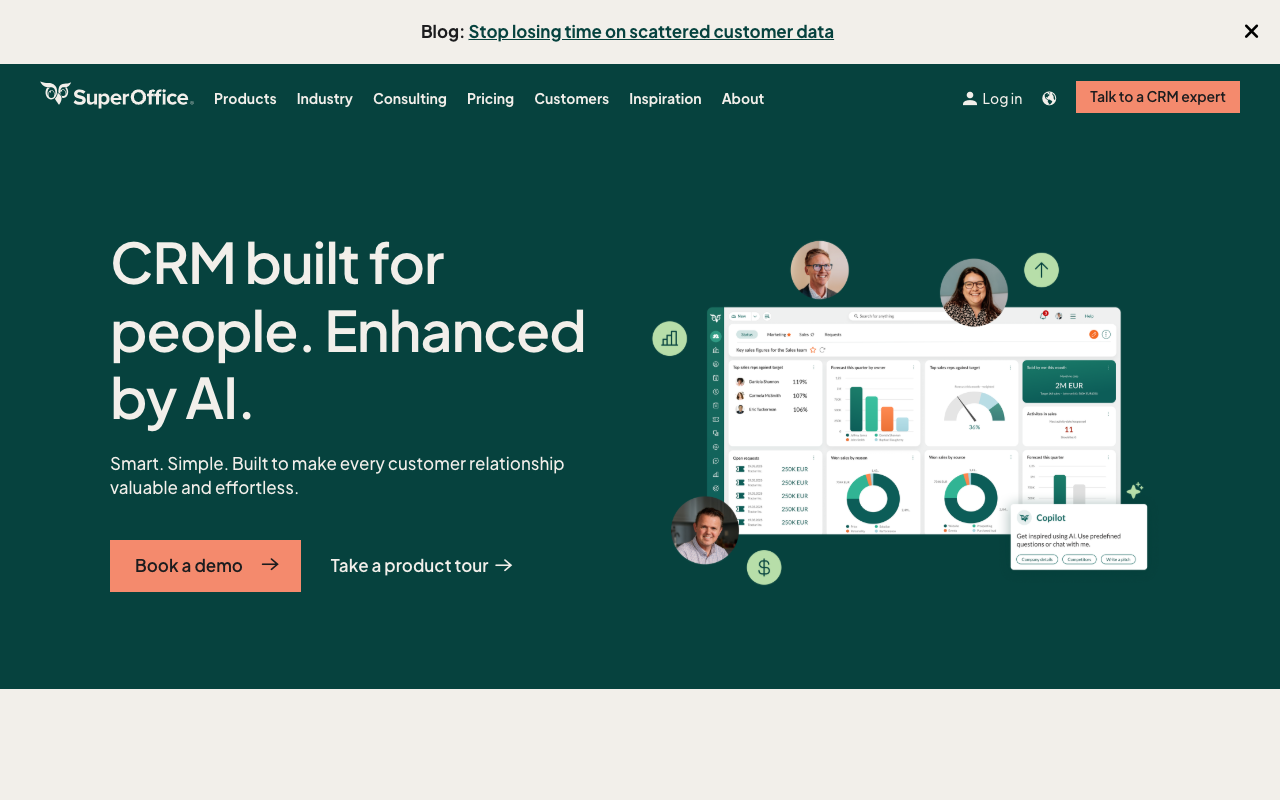
SuperOffice (Norway) is one of the longest-established European CRM platforms, founded in 1990. It covers sales, marketing, and service across a unified platform with strong European B2B adoption, particularly in the Nordics, DACH, and Benelux markets. Sales Essentials starts at €71/user/month (annual billing). Data is hosted in the EU under Norwegian jurisdiction.
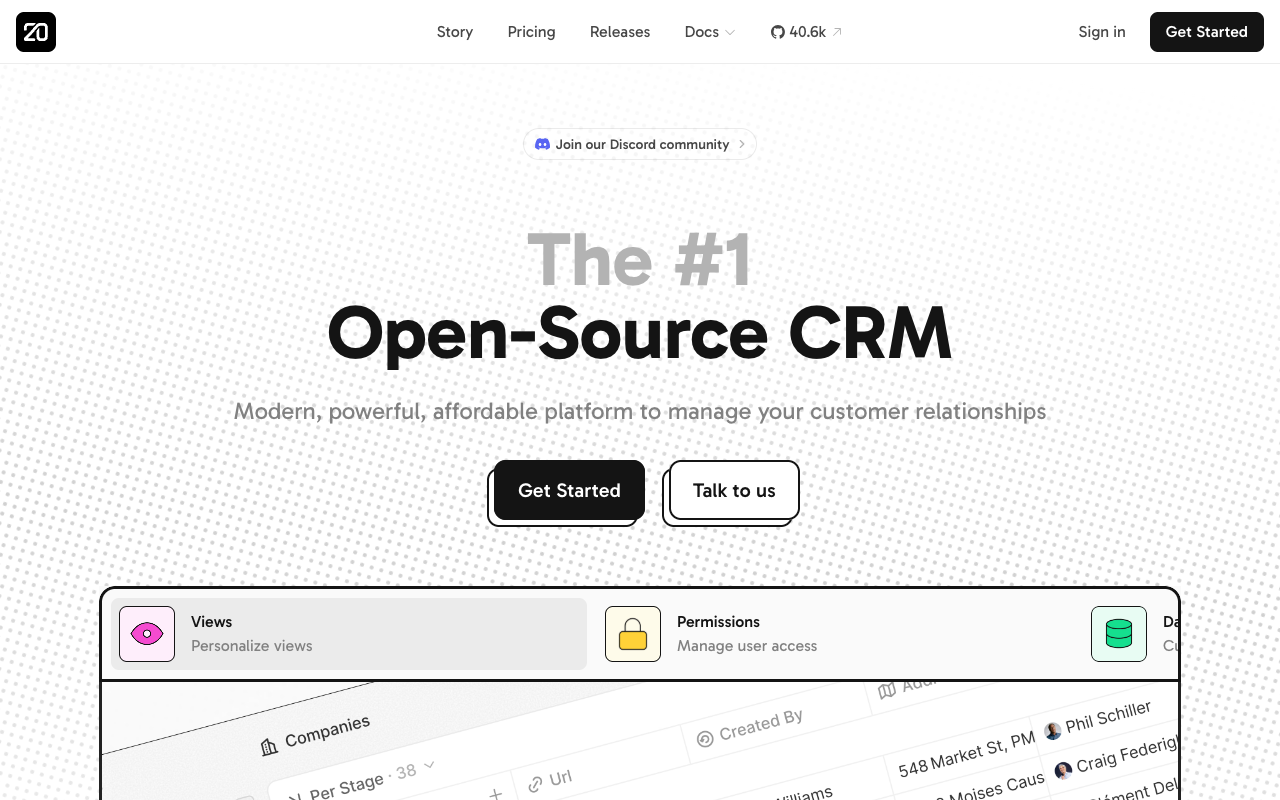
Twenty (France) is an open-source CRM positioned as a modern alternative to Salesforce. The platform is fully self-hostable, giving organizations complete control over data residency. For teams with strict sovereignty requirements, self-hosting Twenty on EU infrastructure eliminates all third-party processor risk. A managed cloud option is also available.
For broader CRM options, see our GDPR-Compliant CRM Software guide or browse Salesforce alternatives in our directory. If you're evaluating the sales and prospecting side of the stack specifically, our sister site Revenue Directory reviews CRM and revenue tools in more depth.
FAQ
Does Salesforce offer EU data residency?
Yes, through the Hyperforce infrastructure. Several European regions are available (Frankfurt, Paris, and others depending on product). However, not every Salesforce product supports Hyperforce, and the company itself remains under US jurisdiction regardless of server location.
Is Salesforce's DPA sufficient for GDPR?
The DPA covers the contractual requirements GDPR sets for processors (purpose limitation, security, sub-processors, breach notification, data subject rights). It does not override US law. Under the CLOUD Act, US authorities can compel Salesforce to produce data regardless of what the DPA states.
What about Salesforce Shield?
Shield adds field-level encryption, event monitoring, and audit trails. Encryption keys can be managed by the customer in some configurations. This improves security and reduces the scope of unencrypted data, but does not change the company's underlying jurisdiction.
Can I migrate from Salesforce to a European CRM?
Yes, but it is typically a multi-month project for enterprise customers. The complexity depends on customizations, integrations, and historical data volume. SMB migrations are simpler. Data export is supported via standard tools; rebuilding workflows, reports, and integrations is where most effort goes. Many European CRM vendors offer migration assistance for Salesforce customers.
Looking for GDPR-compliant alternatives?
Browse our directory of European marketing tools , all verified for GDPR compliance and EU data hosting.