

GDPR-Compliant Marketing Automation: Why EU Data Hosting Matters
Marketing automation platforms process your most sensitive customer data. Here is why EU data hosting matters, what to look for, and which European platforms keep your data within jurisdiction.

Tools mentioned





Marketing automation platforms sit at the center of your customer data. They hold email addresses, behavioral profiles, purchase history, lead scores, website activity logs, and segmentation tags. Every workflow you build processes personal data.
When that platform is operated by a non-European company, all of that data falls under foreign jurisdiction. That is not a theoretical concern. It is a legal and operational risk that European data protection authorities are actively enforcing.
What Marketing Automation Data Falls Under GDPR
A marketing automation platform typically processes:
- Contact records: names, email addresses, phone numbers, company details
- Behavioral data: pages visited, emails opened, links clicked, forms submitted
- Segmentation tags: interests, lifecycle stage, lead score, custom properties
- Transaction data: purchases, subscription events, revenue attribution
- Communication history: every email, SMS, or push notification sent and received
All of this constitutes personal data under GDPR Articles 4 and 6. The platform processing it is a data processor, and you are the controller. You are responsible for where that data goes and under what legal framework it is processed.
The Problem with Non-European Automation Platforms
Most popular marketing automation tools (ActiveCampaign, HubSpot, Mailchimp, Drip, Klaviyo) are US-based companies. Even when they offer EU data center options, three structural problems remain:
1. CLOUD Act Exposure
The US CLOUD Act (2018) allows US law enforcement to compel US-headquartered companies to produce data stored anywhere, provided there is both subject matter and personal jurisdiction. An EU data center operated by a US company does not eliminate this risk. The company is still subject to US jurisdiction, and a US court order can require disclosure without notifying you or the data subjects.
2. Transfer Framework Fragility
EU-US data transfers currently rely on the Data Privacy Framework (DPF), the adequacy decision adopted by the European Commission in July 2023. Its two predecessors, Safe Harbor and Privacy Shield, were both invalidated by the European Court of Justice in Schrems I (2015) and Schrems II (2020).
The DPF's stability is already under serious pressure. In January 2025, the Trump administration fired three of the five members of the Privacy and Civil Liberties Oversight Board (PCLOB), the independent oversight body written into the DPF structure. Without a quorum, PCLOB cannot operate, directly undermining one of the framework's core safeguards. The DPF's redress mechanism (the Data Protection Review Court) was created by executive order, not statute, meaning it can be dismantled by executive order.
A legal challenge by French MP Philippe Latombe was dismissed by the EU General Court in September 2025, but only because the court evaluated conditions at the time of the July 2023 adequacy decision. It explicitly did not assess the Trump-era changes. NOYB and Max Schrems have announced a broader challenge that would incorporate these developments.
If the DPF is invalidated, every business relying on it for marketing automation data transfers will need to find alternative legal mechanisms or switch processors.
3. Standard Contractual Clauses Are Not Enough
Some businesses rely on Standard Contractual Clauses (SCCs) as a backup transfer mechanism. The Schrems II ruling requires a Transfer Impact Assessment (TIA) for transfers using SCCs or Binding Corporate Rules. The assessment must account for the surveillance laws of the recipient country. For US transfers, FISA Section 702 and Executive Order 12333 create a significant burden of proof. Many DPAs have found SCCs insufficient for US transfers without additional supplementary measures.
Note: transfers covered by an active adequacy decision (such as the DPF) do not require a TIA. But the moment the DPF is invalidated, businesses fall back to SCCs, and the TIA obligation kicks in immediately.
What EU Data Hosting Actually Means
Not all "EU data hosting" claims are equal. When evaluating a marketing automation platform, look for:
Company jurisdiction, not just server location. A US company running servers in Frankfurt is still a US company. The CLOUD Act applies to the entity, not the data center. True EU data hosting means the company itself is incorporated and operated within the EU or EEA.
Data processing agreements (DPAs). Every GDPR-compliant processor must offer a DPA specifying what data is processed, how, and where. Check that the DPA explicitly states EU-only processing without sub-processors outside the EU.
Sub-processor transparency. Your automation platform likely uses sub-processors for email delivery, SMS, analytics, and infrastructure. Each sub-processor that handles personal data extends the data flow. European platforms using European sub-processors keep the entire chain within jurisdiction.
Data residency guarantees. Some platforms offer "EU data residency" as an option but default to US processing. Others are EU-only by design. The difference matters: an opt-in EU mode can be changed by the vendor; an EU-native architecture cannot.
European Marketing Automation Platforms
Several European platforms offer marketing automation with full EU data hosting and GDPR compliance by design:
GetResponse (Poland)
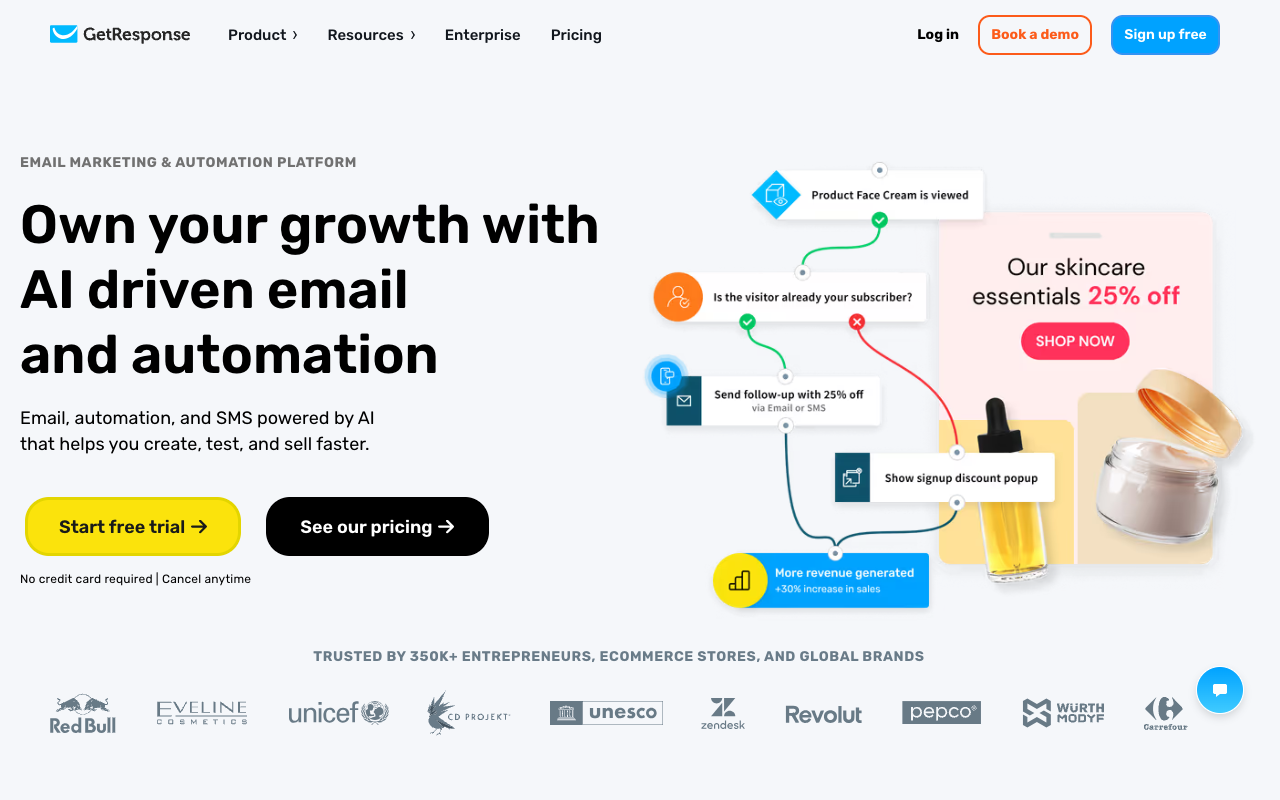
GetResponse is an all-in-one marketing platform covering email, automation workflows, CRM, landing pages, and webinar hosting. The visual automation builder supports multi-branch workflows with conditions, tags, scoring, and time delays. All data is processed within the EU.
GetResponse also offers conversion funnels that combine landing pages, email sequences, and payment processing in a single workflow. The platform includes AI-powered email generation and predictive send-time optimization.
Starting from EUR 13/month. Free 30-day trial available.
Brevo (France)
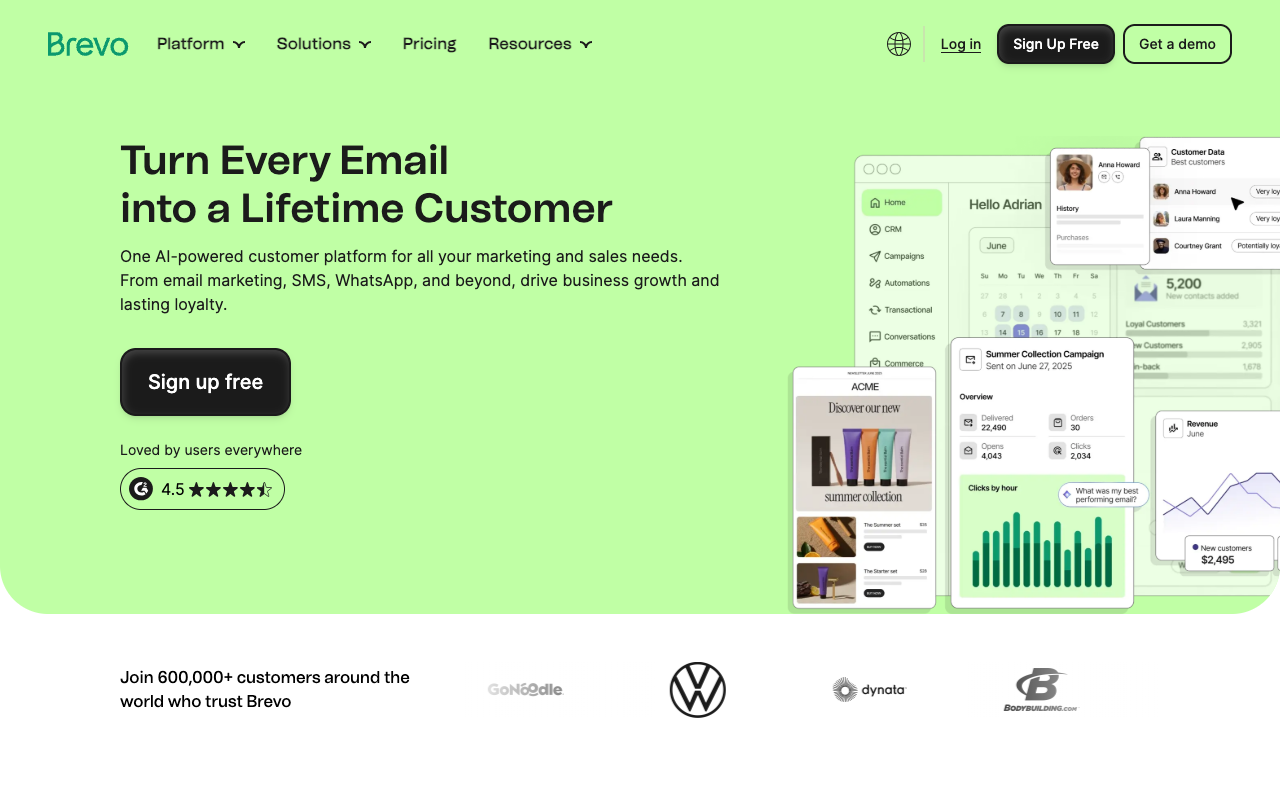
Brevo (formerly Sendinblue) is a French marketing platform processing billions of emails monthly from EU infrastructure. It covers email, SMS, WhatsApp, CRM, and automation in a single tool.
The automation builder supports multi-channel workflows: you can combine email, SMS, and WhatsApp messages in a single sequence. Brevo prices by email volume rather than contact count, which can be significantly cheaper for businesses with large lists and moderate send frequency.
Free plan available (unlimited contacts, 300 emails/day).
Encharge (Bulgaria)
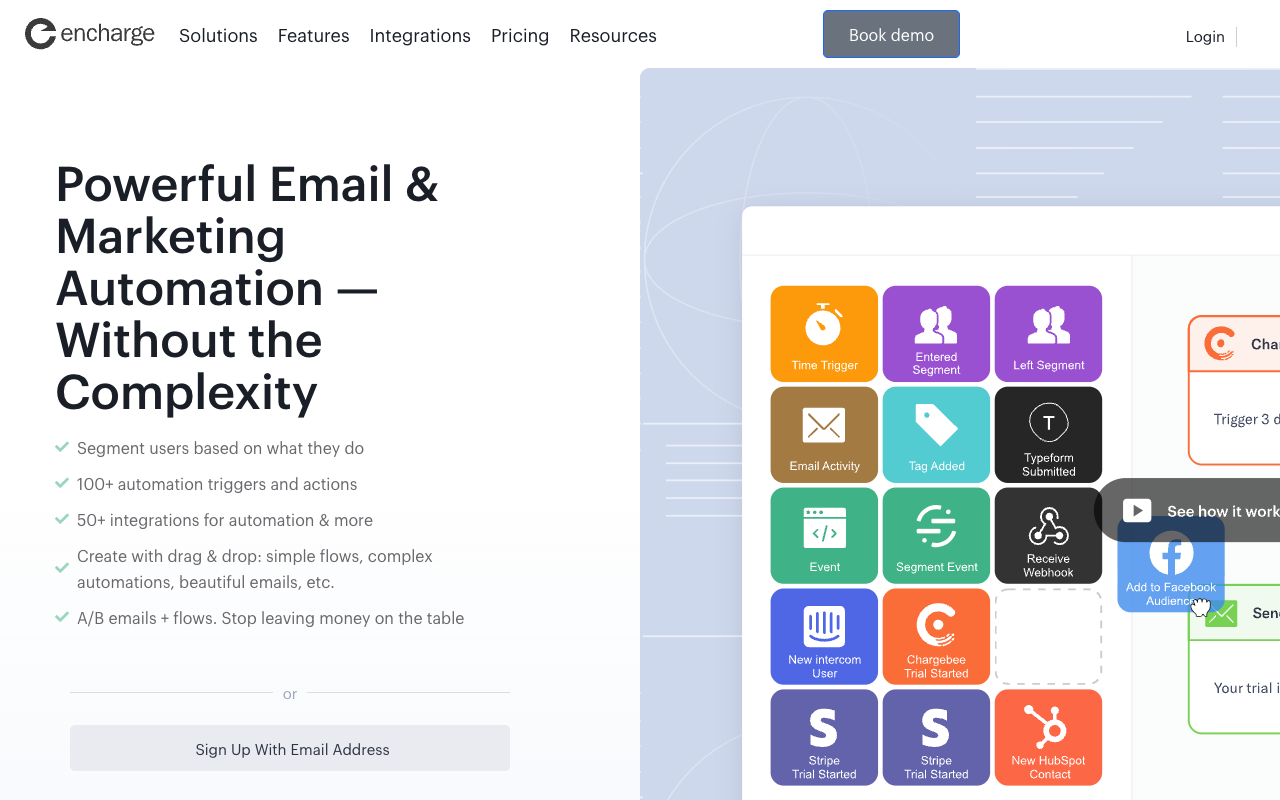
Encharge is a marketing automation platform built specifically for SaaS and product-led businesses. The visual flow builder connects directly to product events via Segment, API, or JavaScript tracking, allowing you to trigger automation based on in-app behavior rather than just email engagement.
All data is processed within the EU. Encharge is particularly strong for trial-to-paid conversion workflows, feature adoption sequences, and user onboarding.
Starting from $79/month.
User.com (Poland)
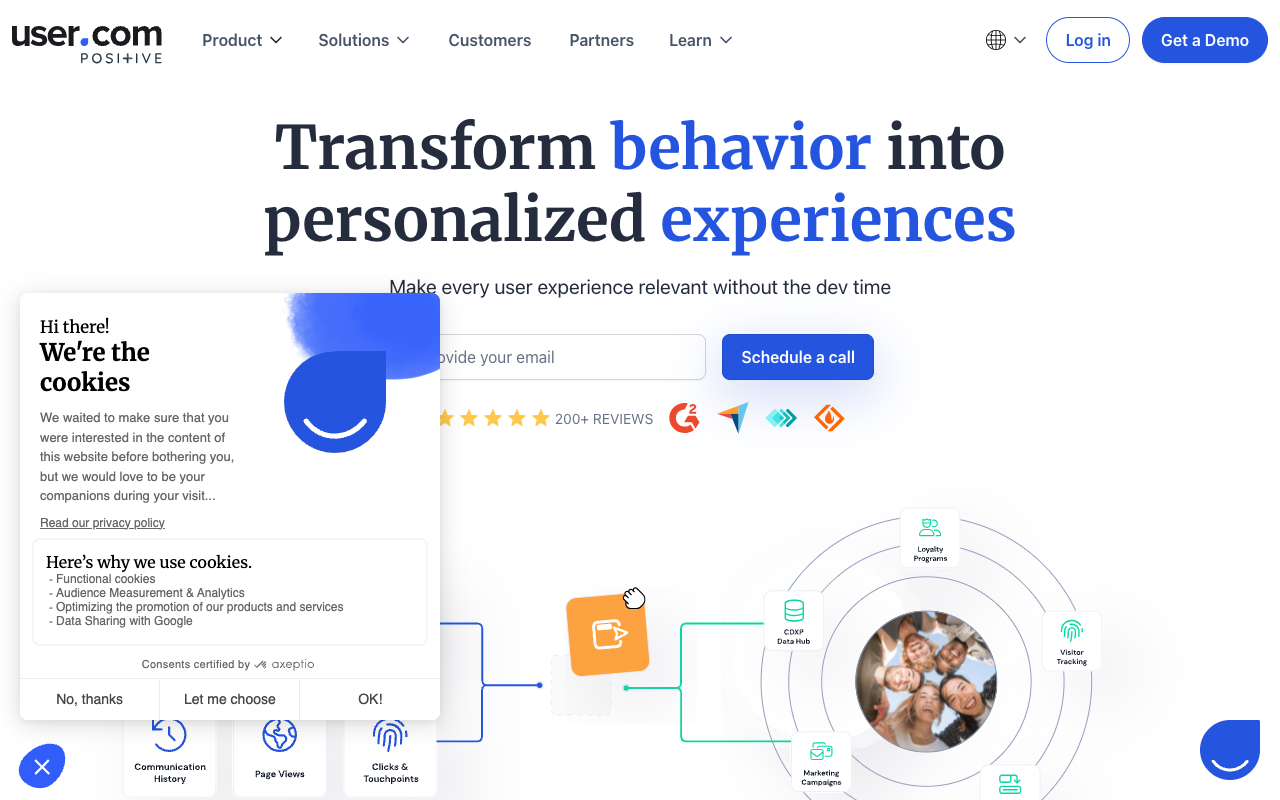
User.com combines CRM, marketing automation, live chat, push notifications, and a knowledge base in a single platform. The automation module supports triggers from website visits, email engagement, chat interactions, and custom events.
The free plan includes up to 5,000 contacts with access to all core features, making it one of the most generous free tiers among automation platforms. All data is processed within the EU.
Omnisend (Lithuania)

Omnisend is purpose-built for e-commerce email and SMS automation. It integrates deeply with Shopify, WooCommerce, and BigCommerce, pulling product catalog and order data directly into segmentation and automation workflows.
Pre-built automations cover cart abandonment, welcome series, browse abandonment, post-purchase follow-ups, and win-back campaigns. All data is processed within the EU.
Free plan available (250 contacts).
MailerLite (Lithuania)
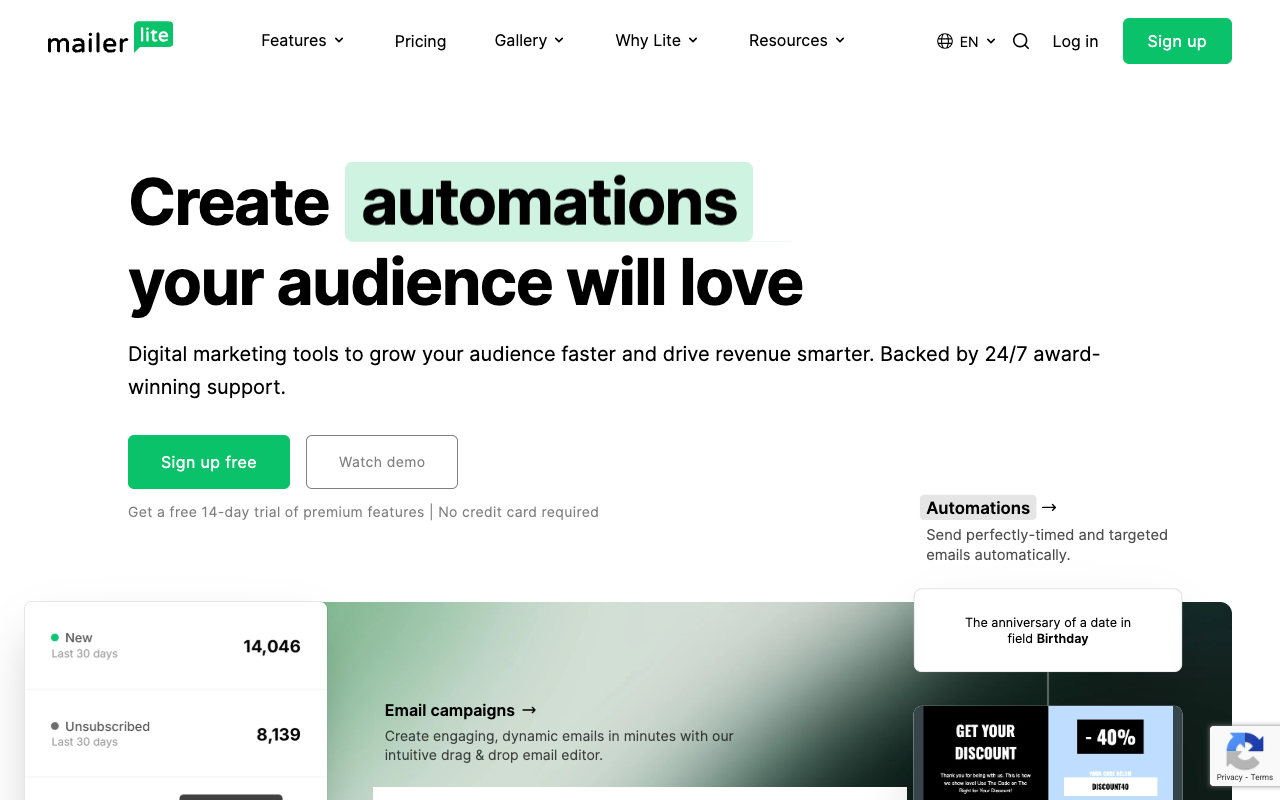
MailerLite covers email marketing, automation, landing pages, and pop-ups with a clean, intuitive interface. The automation builder handles welcome sequences, drip campaigns, and re-engagement flows. While less complex than ActiveCampaign or GetResponse, it covers what most small businesses need.
All data is processed within the EU. Free plan available (500 subscribers, 12,000 emails/month).
How to Evaluate Your Current Stack
If you are currently using a non-European marketing automation platform, here is a practical assessment framework:
-
Map your data flows. List every type of personal data your automation platform processes. Include contact records, behavioral tracking, integrations with other tools, and any data shared with sub-processors.
-
Check your DPA. Read the data processing agreement. Does it specify EU-only processing? Does it list sub-processors and their locations? Are there carve-outs allowing data transfer outside the EU?
-
Assess transfer mechanisms. If your platform relies on the DPF or SCCs for EU-US transfers, consider what happens if those mechanisms are invalidated. Do you have a migration plan?
-
Calculate switching cost vs. compliance cost. Migrating automation workflows takes effort. But a GDPR enforcement action can result in fines up to EUR 20 million or 4% of total worldwide annual turnover (whichever is higher), calculated against the entire corporate group. For most businesses, the migration cost is a fraction of the compliance risk.
-
Test European alternatives. Most platforms on this list offer free plans or trials. You can evaluate feature parity before committing to a full migration.
FAQ
Does EU data hosting guarantee GDPR compliance?
No. EU data hosting eliminates the data transfer problem, but GDPR compliance also requires lawful basis for processing, data minimization, proper consent management, data subject rights fulfillment, and security measures. EU hosting is a necessary condition, not a sufficient one.
Can I use a non-European platform if it has an EU data center?
If the platform participates in the DPF, you can rely on that adequacy decision without a TIA. But you are accepting residual risk from CLOUD Act exposure and transfer framework fragility. If the DPF is invalidated, you fall back to SCCs with a TIA obligation. European-headquartered platforms eliminate both risks entirely.
What about HubSpot's EU data hosting option?
HubSpot offers EU data hosting for enterprise plans. The data sits in the EU, but HubSpot is a US company subject to the CLOUD Act. This reduces but does not eliminate jurisdiction risk. The same applies to ActiveCampaign, Mailchimp, and any other US vendor offering EU data centers.
How difficult is it to migrate marketing automation?
Contact data (lists, tags, custom fields) migrates easily via CSV export/import. Automation workflows need to be rebuilt manually, as no platform supports direct workflow import from competitors. Plan for 2 to 4 weeks of setup time depending on complexity. Most European platforms offer migration support or onboarding assistance.
Is the Data Privacy Framework stable?
As of early 2026, the DPF faces significant uncertainty. The PCLOB, a key oversight body in the framework, lost its quorum after the Trump administration dismissed three members in January 2025. The framework's redress mechanism exists by executive order, not legislation. The EU General Court dismissed the first legal challenge in September 2025, but only evaluated conditions as of July 2023. A broader challenge incorporating recent developments is expected from NOYB. Legal practitioners are advising companies to maintain SCCs and TIAs as a backup.
Explore all European marketing automation tools or browse ActiveCampaign alternatives in our directory.
Looking for GDPR-compliant alternatives?
Browse our directory of European marketing tools , all verified for GDPR compliance and EU data hosting.