Back to Alternatives

European Alternative to SendGrid

SendGrid is a transactional email platform owned by Twilio. European businesses need alternatives with EU data residency.

The best European alternative to SendGrid is Mailcoach.

Mailcoach logo

1. Mailcoach

GDPR Compliant
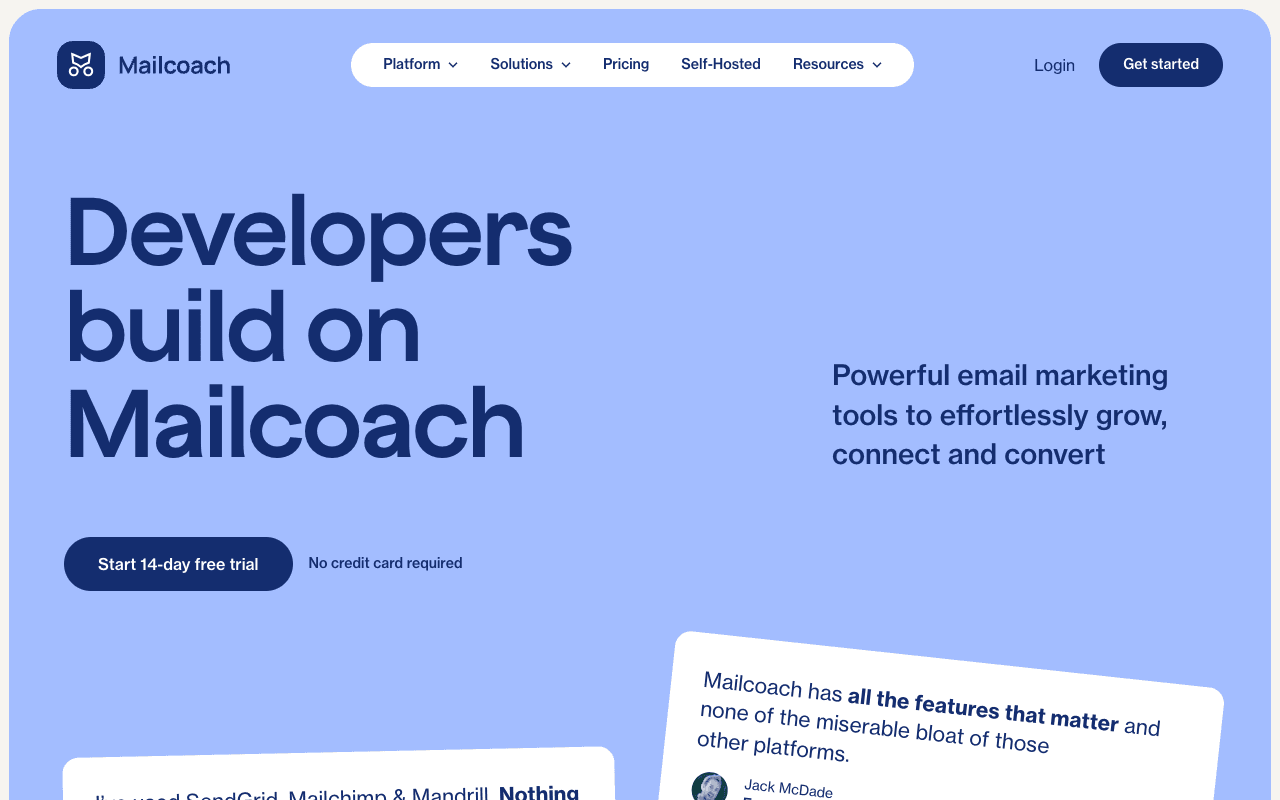
Mailcoach screenshot

Email Marketing for Developers, by Developers

Mailcoach is a Belgian email marketing platform built by Spatie, one of the most respected Laravel development agencies in Europe. It offers both a cloud SaaS and a self-hosted Laravel package, giving developers full control over their email infrastructure.

Two Deployment Options

Mailcoach lets you choose how to run your email marketing:

  • Cloud (SaaS): Managed hosting with a simple web interface for creating campaigns, automations, and transactional emails
  • Self-hosted: Install Mailcoach as a Laravel package on your own server, connecting to any SMTP provider (Amazon SES, Postmark, SendGrid, Mailgun, or your own)
  • Per-email pricing: The cloud version charges per email sent (starting at EUR 0.0005/email) rather than per subscriber. No monthly minimum
  • Automation: Build multi-step workflows triggered by tags, subscriptions, or custom events
  • Template editor: Create emails with a drag-and-drop builder or raw HTML
  • Transactional email: Send order confirmations, password resets, and other triggered emails alongside marketing campaigns

Why Developers Choose Mailcoach

For teams that want the simplicity of MailerLite but with developer-friendly pricing and the option to self-host, Mailcoach fills a unique niche. The self-hosted version is particularly popular with agencies and SaaS companies that want complete ownership of their email marketing infrastructure.

Key features include:

  • •Cloud SaaS or self-hosted Laravel package
  • •Per-email pricing - No subscriber limits, pay for what you send
  • •Automation - Multi-step workflows with tag and event triggers
  • •Transactional email - Marketing and transactional from one platform
  • •Template editor - Drag-and-drop or HTML
  • •Any SMTP provider - Connect to SES, Postmark, Mailgun, or your own

Pros

Per-email pricing is cheapest for large lists with low send frequency

Self-hosted option for full data ownership

Built by Spatie, a trusted Belgian Laravel shop

Cons

Self-hosted version requires Laravel expertise

Smaller feature set compared to full marketing platforms like Brevo

Freemiumfrom from €0.0005/emailEmail Marketing
Read more
Bouncer logo

2. Bouncer

GDPR Compliant
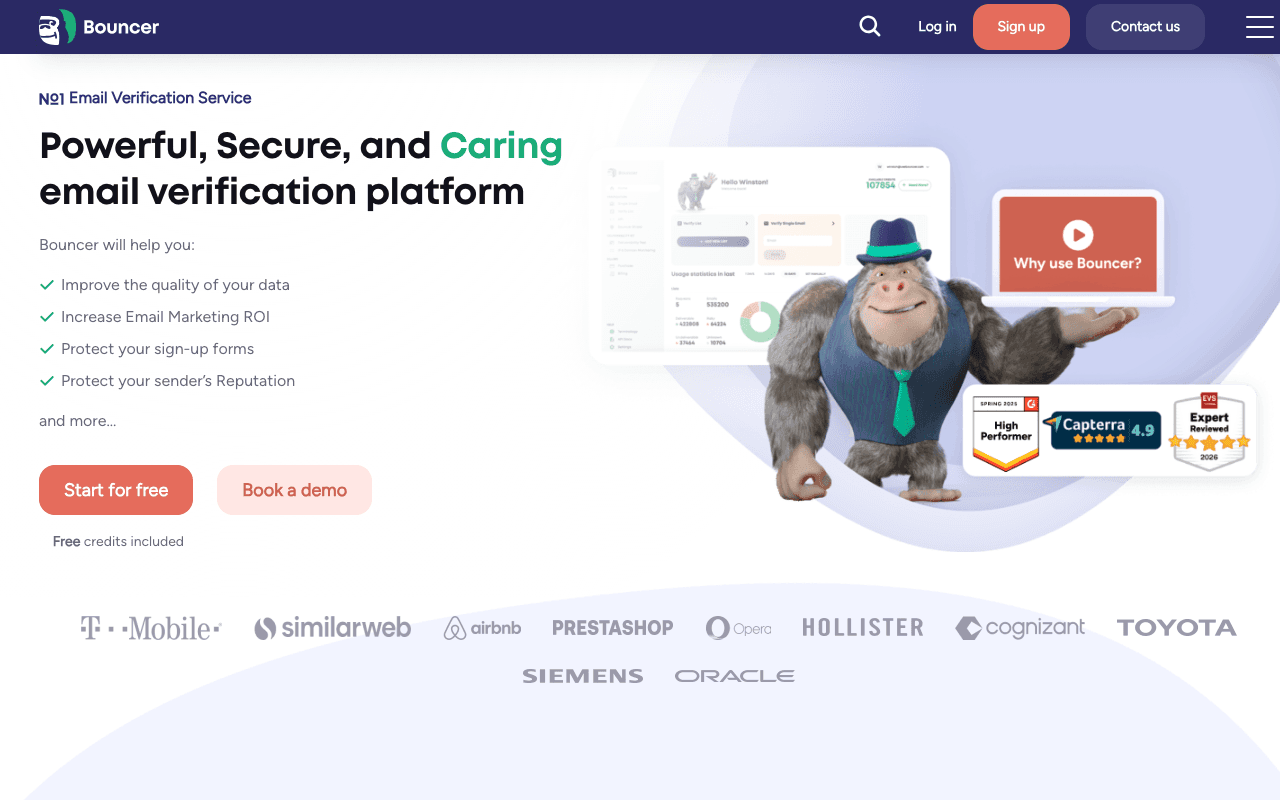
Bouncer screenshot

Cleaning the List Before It Costs You the Domain

Bouncer sits in front of whatever you send with. It answers one question well: which of these addresses will bounce, and which will quietly damage your sender reputation.

The Four Products

  • Email Verification for bulk list cleaning, via app or API, with synchronous and asynchronous endpoints
  • Bouncer Shield for real-time checking at the signup form, blocking invalid, malicious or fraudulent addresses by address and by IP before they enter your database
  • Toxicity Check, which scores an address 0-5 for the risks a syntax check cannot see: widely circulated or breached addresses, known complainers and litigators, and likely spam traps
  • Deliverability Kit for inbox placement tests, blocklist monitoring, and SPF, DKIM, DMARC and SpamAssassin checks

The company reports under 2% unknown results, which matters more than the headline accuracy figure: an "unknown" is an address you still have to decide about yourself, and Bouncer does not charge for them or for duplicates within a list.

Pricing That Suits Irregular Cleaning

Verification is pay-as-you-go and credits never expire: $8 for 1,000, $60 for 10,000, $400 for 100,000, down to roughly $2 per thousand at a million. Auto-refill is available if you would rather not think about it. The Deliverability Kit is a separate subscription from $25/month for 250 test emails and 10 monitored IPs or domains. Bouncer Shield is priced per monthly check.

This is the unusual bit for the category. Most verification services push you onto a monthly plan whose credits expire; buying a block that sits in the account until you need it suits an agency that cleans a client list twice a year far better.

Polish Company, Frankfurt Servers, US Cloud

Published by Bouncer Sp. z o.o. in Wrocław, with the footer stating it plainly: "Made with love in Wroclaw. Hosted in EU."

The hosting claim holds up in the DPA, which is more specific than most: "Bouncer stores and processes Personal Data in cloud-based infrastructure stack with European Union based AWS cloud (Frankfurt region), thus the data is not transferred outside the European Union." The privacy policy agrees, placing the servers in Frankfurt.

That AWS detail is the caveat worth understanding, and it is a caveat about jurisdiction rather than about location. Your list does stay in Germany. But Amazon Web Services is a US company, so the CLOUD Act reaches the provider physically holding the data even though the data never leaves the EU, and even though Bouncer itself is Polish and cannot be compelled. If that distinction matters to you, Statable and Pirsch are examples in other categories of vendors who avoid it; in verification specifically, you are handing over your entire subscriber list, so it is a fair question to ask.

Where It Fits

Verification is not something you buy instead of an email platform, it is something you buy alongside one. Bouncer pairs with any of the senders in email marketing, and its Deliverability Kit overlaps with the monitoring tools in email deliverability if you already run one.

Key features include:

  • •Bulk email verification by app or API, synchronous and asynchronous
  • •Bouncer Shield for real-time verification at the signup form
  • •Toxicity Check scoring 0-5 for spam traps, complainers and breached addresses
  • •Deliverability Kit with inbox placement tests and blocklist monitoring
  • •SPF, DKIM, DMARC and SpamAssassin authentication checks
  • •Company data enrichment from public sources
  • •Credits that never expire, with optional auto-refill
  • •Integrations with common email marketing platforms

Pros

Credits never expire, which suits irregular list cleaning far better than a monthly plan

The DPA names the actual hosting region rather than saying "within the EU"

No charge for duplicate addresses or for unknown results

Under 2% unknown rate, so fewer addresses are left for you to judge

Verification, form protection and deliverability testing in one account

Cons

Runs on AWS, so a US provider physically holds your subscriber list despite EU-only storage

No public sub-processor list, unlike the strongest performers on this site

Priced in US dollars by a Polish company, so EU buyers carry the FX movement

The Deliverability Kit is a separate subscription rather than part of the credit pool

Verification means uploading your whole list to a third party, which is worth a DPIA on larger databases

Paidfrom $8 per 1,000 creditsEmail Deliverability
Read more
AhaSend logo

3. AhaSend

GDPR Compliant
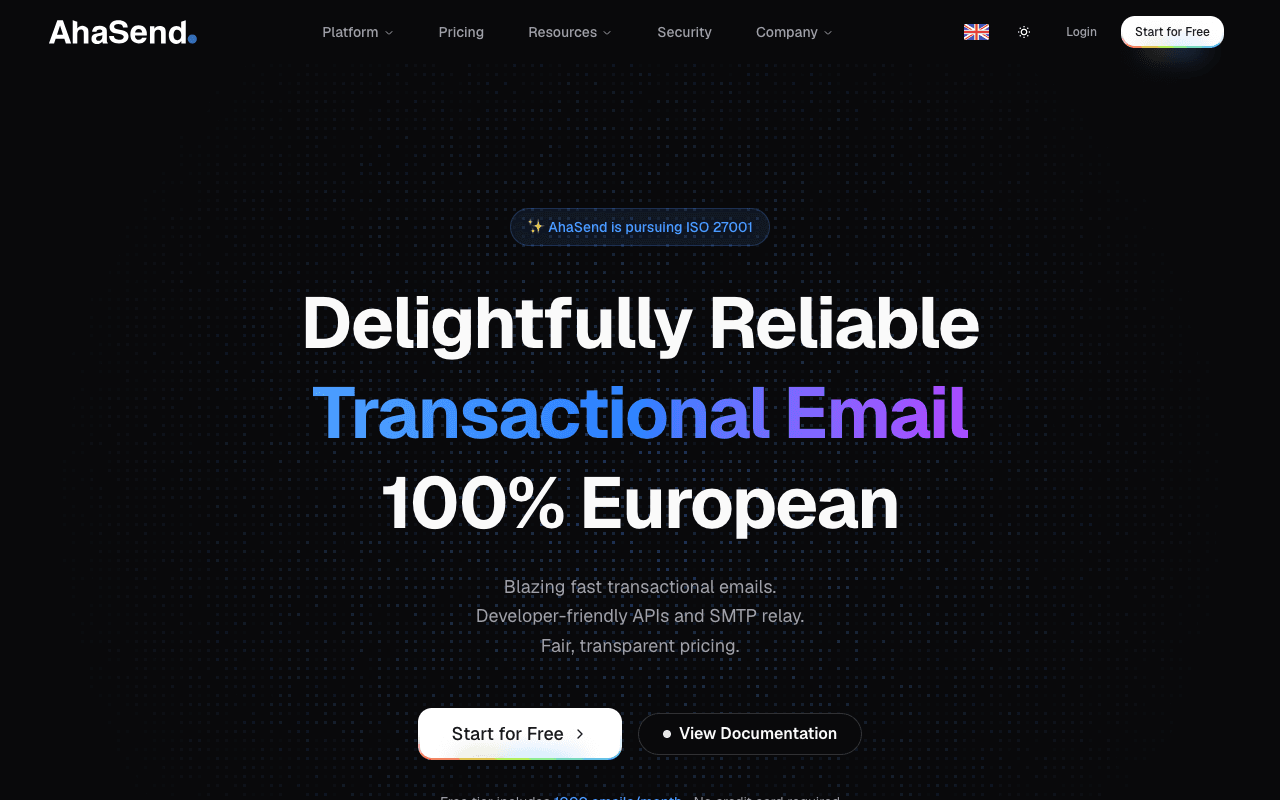
AhaSend screenshot

Transactional Email With the Paperwork Actually Done

AhaSend is a developer-facing sending service, competing with the transactional side of the large platforms. What makes it worth a close look here is not the API, which is conventional and well documented. It is that the compliance documentation is the best of any tool in this tranche, by a distance.

The Product

  • REST API and SMTP relay with official SDKs, a CLI and sandbox mode
  • Dedicated IPs with automated warm-up, dedicated IP pools, and bring-your-own-IP at the top tier
  • Inbound email routing and signed webhooks, so replies and events come back into your own system
  • Platform Partner features: sub-accounts, DNS whitelabeling, per-domain DKIM selectors and bring-your-own-DKIM keys, which is what you need if you are reselling sending inside your own product
  • Reputation Shield and typosquatting protection
  • Configurable retention, from zero days upward, so you can choose not to have message bodies stored at all

Pricing starts at a genuine free tier of 1,000 emails a month with no card, on the same multi-region EU infrastructure as the paid plans. Pro covers 25,000 and Max 100,000, with flat-rate billing plus per-thousand overage, in USD or EUR. There are no long-term contracts.

Named Sub-processors, With Countries

Most vendors write "we use third-party providers". AhaSend writes this:

Cloud Hosting and Infrastructure: Hetzner Online GmbH (Germany/Finland, and optionally USA if you chose to use our US-based SMTP relay) and DA International Group Ltd (operating as AlphaVPS, Bulgaria) to host our Services and associated data.

Then it names the US ones separately and says exactly what each does: Stripe for payments, PostHog for analytics, Cloudflare for website security, all three relying on the EU-US Data Privacy Framework, and Trackdesk in Czechia for the affiliate programme. It commits to erasing personal data within 14 days of an account deletion request, and explains that billing records are kept seven years because Dutch tax law requires it.

The DPA at ahasend.com/dpa is a real Article 28 agreement, not a compliance page: Annex 1 details of processing, Annex 2 technical and organisational measures, Annex 3 the live sub-processor list, with the online version declared authoritative.

Where the Exposure Actually Sits

Your message content and recipient data sit on Hetzner in Germany and Finland, and Hetzner is German. AlphaVPS is Bulgarian. So the default configuration keeps the email itself entirely inside EEA-owned infrastructure, which is rarer than it sounds in this category.

Two caveats, both stated by the vendor rather than found by us. First, the US providers are real but touch adjacent data: Stripe sees your billing details, PostHog sees product analytics, Cloudflare fronts the website. Second, AhaSend offers an optional US-based SMTP relay. If you choose it, your message data does go to Hetzner's US infrastructure, under Standard Contractual Clauses. That is a choice you make, not a default, and this listing rates the default.

ISO 27001 is listed as pending rather than held, which the site says itself.

Where It Fits

Compare with EmailLabs and MessageFlow in Poland, and with the transactional layer of Brevo and Mailjet. Among European senders, this is the one to point a developer at when the question is "where does the data actually go". See email deliverability.

Key features include:

  • •REST API and SMTP relay with official SDKs, CLI and sandbox mode
  • •Dedicated IPs with automated warm-up, plus dedicated IP pools and BYOIP
  • •Inbound email routing with signed webhook endpoints
  • •Sub-accounts, DNS whitelabeling and per-domain DKIM selectors for platform partners
  • •Configurable message retention starting at zero days
  • •Reputation Shield and typosquatting protection
  • •SPF, DKIM and DMARC authentication with automatic DKIM key rotation
  • •OIDC single sign-on, 2FA enforcement, scoped API keys and IP allow lists

Pros

Names every sub-processor with its country and purpose, which almost no vendor this size does

Complete Article 28 DPA published with all three annexes, including the live sub-processor list

Message data sits on Hetzner and AlphaVPS, both EEA companies, so no US provider holds the email

Genuine free tier of 1,000 emails a month on the same EU infrastructure as paid plans

Retention is configurable down to zero days, so you can choose not to store message bodies

Cons

The optional US-based SMTP relay moves message data to Hetzner US if you select it

Stripe, PostHog and Cloudflare are US providers, though they touch billing, analytics and the website rather than email

ISO 27001 is described as pending, not held

Transactional sending only: no campaign builder, segmentation or automation

Smaller company than the incumbents, which larger buyers will treat as a resilience question

Read more
Mailjet logo

4. Mailjet

Partially Compliant
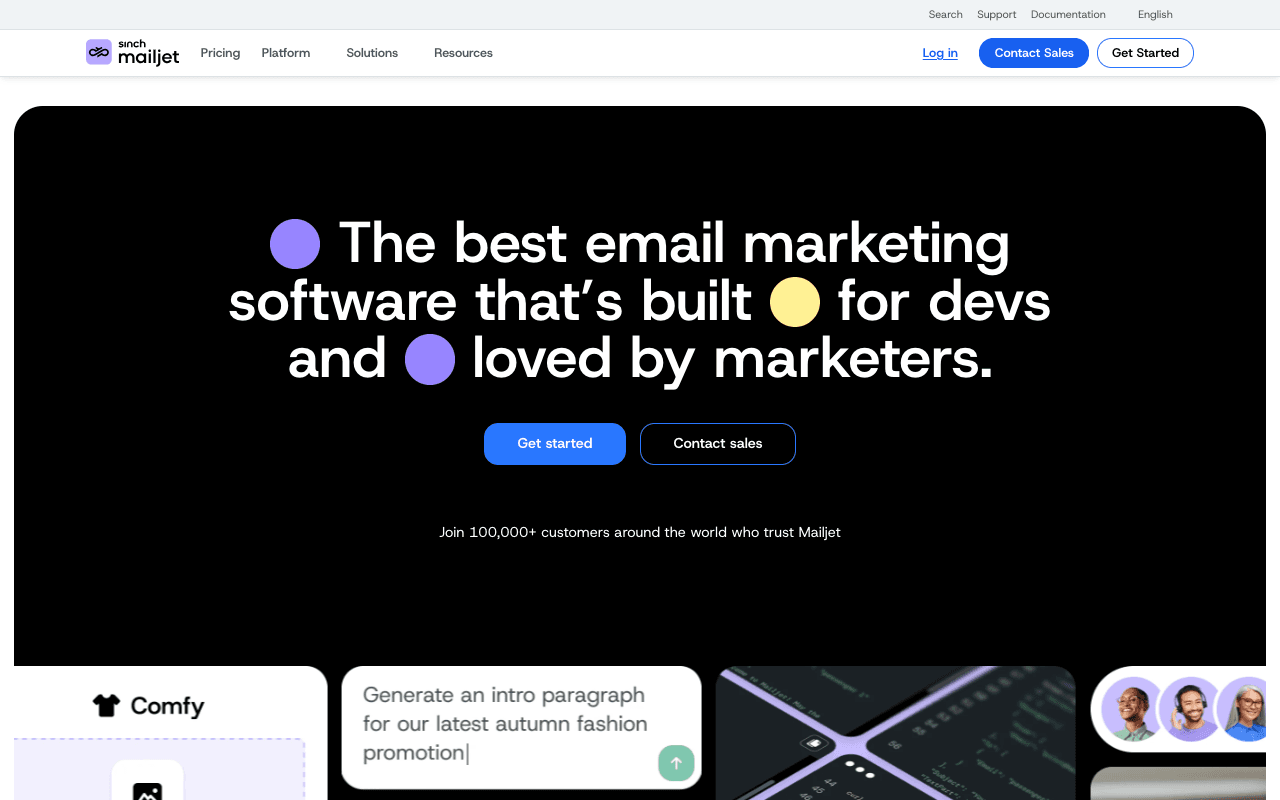
Mailjet screenshot

Email Marketing and Transactional Email from France

Mailjet is a French email platform that uniquely combines marketing email campaigns with transactional email delivery. Its collaborative email editor allows multiple team members to work on the same email simultaneously, a feature no other platform offers.

Marketing + Transactional in One Platform

Mailjet bridges the gap between marketing and engineering:

  • Collaborative email editor. Real-time team editing like Google Docs for email
  • Marketing campaigns: Newsletters, promotions, and automated sequences
  • Transactional emails: API and SMTP relay for order confirmations, password resets, etc.
  • A/B testing. Test up to 10 versions of your emails simultaneously
  • Advanced segmentation. Target contacts based on behavior and properties

Now Part of the Sinch Group

Mailjet is now part of Swedish messaging company Sinch, with all data stored on EU servers. The free plan includes up to 6,000 emails per month.

Key features include:

  • •Collaborative editor - Real-time team editing for email creation
  • •Marketing campaigns - Newsletters, automation, and segmentation
  • •Transactional API - SMTP relay and REST API for app-generated emails
  • •A/B testing - Test up to 10 email variations simultaneously
  • •Contact management - Advanced segmentation and list management

Pros

Unique collaborative editing feature

Combined marketing and transactional email

Generous free plan (6,000 emails/mo)

Cons

Automation features are basic compared to specialists

Support response times can be slow on free plan

Freemiumfrom Free up to 6,000 emails/moEmail Marketing
Read more
EmailLabs logo

5. EmailLabs

Partially Compliant
EmailLabs screenshot

The Layer Underneath the Newsletter Tool

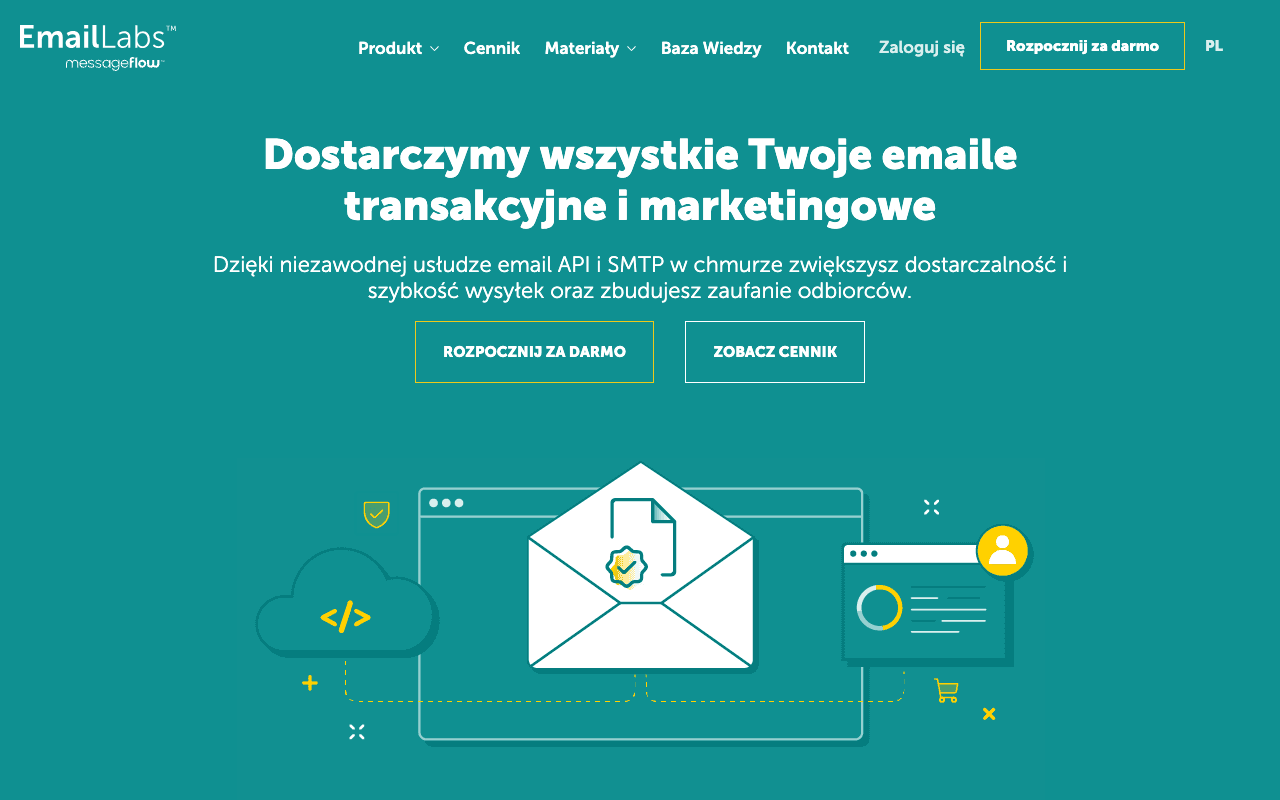
EmailLabs is not where you write emails. It is where they leave from. If you already have an application generating order confirmations, password resets and notifications, this replaces whatever SMTP relay is currently doing that job.

What It Handles

  • SMTP relay and REST API for transactional and bulk sending
  • Dedicated IP addresses with reputation management, which is the part you are actually paying for at volume
  • Authentication setup for SPF, DKIM and DMARC
  • Delivery, bounce, open and click reporting with webhooks back into your own system
  • Deliverability support from a team, rather than only documentation

The Vercom Connection Is Worth Knowing

EmailLabs is published by VERCOM S.A., ul. Wierzbięcice 1B, 61-569 Poznań, KRS 0000535618, NIP 7811765125. Vercom is a listed Polish company, and it is also the parent of MessageFlow, which this directory already lists separately.

That is not a criticism, but it is a fact a buyer comparing the two should have. If you are weighing EmailLabs against MessageFlow as independent options, you are choosing between two brands in the same group, on much of the same infrastructure, and a resilience or concentration concern does not get solved by moving between them.

Mostly Polish Infrastructure, With American Edges

The privacy policy names the infrastructure sub-processors, which is more than most vendors in this category do: Beyond.pl and NTT Global Data Centers alongside Amazon Web Services (S3). Beyond.pl is a Poznań data centre operator, and the presence of two European facilities in that list is the reason this is not a US-hosted product.

The policy also names Google (Analytics, Ads, Tag Manager, Vertex AI) and Microsoft (Azure OpenAI) among the tools it uses. Those appear in the context of Vercom's own websites and AI features rather than of customer message data, but the policy does not draw that line explicitly, which is exactly why the rating here is PARTIAL rather than COMPLIANT.

The full processor list, "including the country of their registered office, the purpose of processing, and the data transfer mechanism", is available on request from the DPO rather than published. That is lawful, and it is a step better than nothing, but a published list is what separates the tools rated COMPLIANT here from the ones rated PARTIAL.

Where It Fits

Compare with MessageFlow from the same group, and with the transactional side of Brevo and Mailjet. For a smaller, independently owned alternative in the same layer, see AhaSend. The category view is email deliverability.

Key features include:

  • •SMTP relay and REST API for transactional and bulk sending
  • •Dedicated IP addresses with reputation management
  • •SPF, DKIM and DMARC authentication setup
  • •Delivery, bounce, open and click reporting
  • •Webhooks for delivery events back into your own system
  • •Throughput controls for high-volume campaigns
  • •Deliverability support from a named team
  • •Polish-language support and invoicing

Pros

Names its infrastructure sub-processors in the privacy policy, which most senders do not

Two of the three named data centre providers are European, including Beyond.pl in Poznań

Built for the sending layer specifically, so deliverability support is the product rather than an upsell

Backed by a listed Polish company rather than a two-person operation

Polish invoicing and support for buyers who need both

Cons

Same parent company as MessageFlow, so the two are not independent options

Full sub-processor list is only available on request, not published

AWS appears in the infrastructure list, so US CLOUD Act exposure cannot be ruled out

The policy does not say which provider holds message data as opposed to website data

No standalone DPA document located; transfer mechanisms are not stated in the published text

Read more
Re:Shark logo

6. Re:Shark

Partially Compliant
Re:Shark screenshot

Outbound With the Infrastructure Included

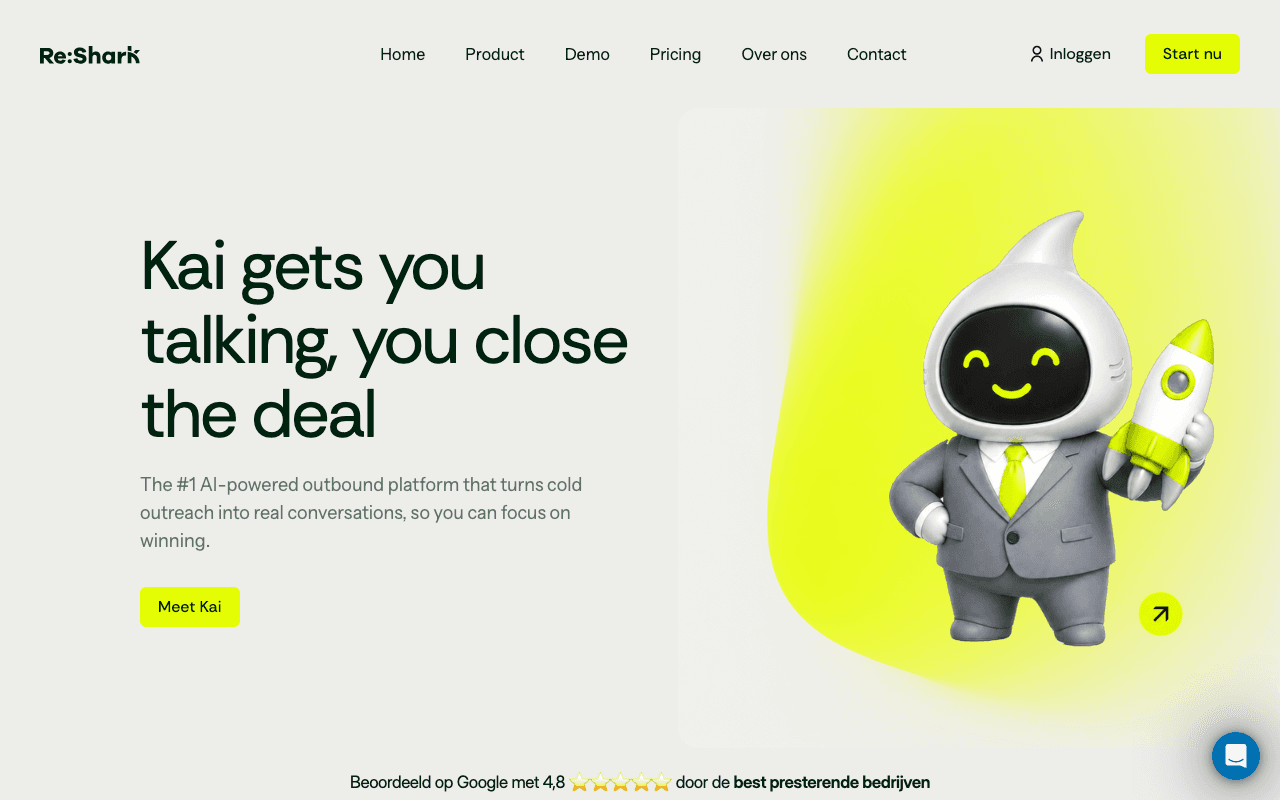
Most cold outreach tools hand you a sequencer and let you work out the sending infrastructure yourself. That is where campaigns actually die: misconfigured DNS, a single domain burned through overuse, cold inboxes hitting spam from the first send.

Re:Shark folds that layer into the product.

What Is Automated

  • Automatic DNS, DMARC and DKIM configuration, rather than a documentation page telling you to do it
  • Automatic domain rotation and inbox warm-up, so sending volume spreads across domains and reputation is built before real campaigns run
  • Waterfall enrichment, which queries data providers in sequence rather than relying on one, so coverage is better than any single source
  • Kai, an AI assistant for sequence and message work
  • Credits-based usage, with volume scaling by plan

Pricing Is Not for Casual Use

Plug & Play is €295/month for one user, 750 credits, one domain and two inboxes, aimed at freelancers and small teams. Growth is €595/month for up to three users and 5,000 credits.

That is a serious commitment next to a €30/month sequencer, and it only makes sense if outbound is a real revenue channel for you rather than an experiment. The counter-argument is that the domains, inboxes and warm-up tooling you would otherwise buy separately are inside that number.

Amsterdam, EU-Only Servers

Published by The Ocean B.V., John M. Keynesplein 12, 1066 EP Amsterdam. The privacy policy is written under GDPR and Dutch data protection law, names a Data Protection Officer reachable by post at the Amsterdam address, and states plainly:

EU-Based Servers: All data processing and storage occur within the European Union.

That sentence is the reason this rates well. It is unqualified, it is in the vendor's own policy, and it covers processing as well as storage. What is missing is the layer below it: no sub-processor list is published, and no DPA document was located at a public URL. For a tool whose entire function is processing other people's contact data, both would be reasonable to ask for before signing, and their absence is why this reads PARTIAL rather than COMPLIANT.

Note also that "all processing occurs within the EU" says where, not who. Waterfall enrichment implies third-party data providers, and enrichment vendors in this space are frequently American. The policy does not name them.

Where It Fits

Sits alongside lemlist and Woodpecker among European outbound tools, with more infrastructure automation and a higher price. If you want the deliverability monitoring without the sequencer, the tools in email deliverability cover that separately.

Key features include:

  • •Automatic DNS, DMARC and DKIM configuration
  • •Automatic domain rotation across sending domains
  • •Inbox warm-up before live campaigns
  • •Waterfall enrichment across multiple data providers
  • •Kai AI assistant for sequences and messaging
  • •Credit-based usage that scales by plan
  • •Multi-inbox and multi-domain management
  • •Chat support on every plan

Pros

Automates the deliverability setup that most outbound tools leave to the customer

States without qualification that all processing and storage happen in the EU

Domain rotation and warm-up are included rather than bought as a separate service

Names a Data Protection Officer with a postal address

Waterfall enrichment gives better coverage than a single data source

Cons

€295/month entry price, high for a freelancer despite being pitched at one

No sub-processor list published, which matters for a tool built on enrichment

No DPA located at a public URL

Enrichment data providers are unnamed, and this market's providers are often American

Site and pricing are Dutch-first

Read more
DMARC Advisor logo

7. DMARC Advisor

Partially Compliant
DMARC Advisor screenshot

Getting Your Domain to a Policy of Reject

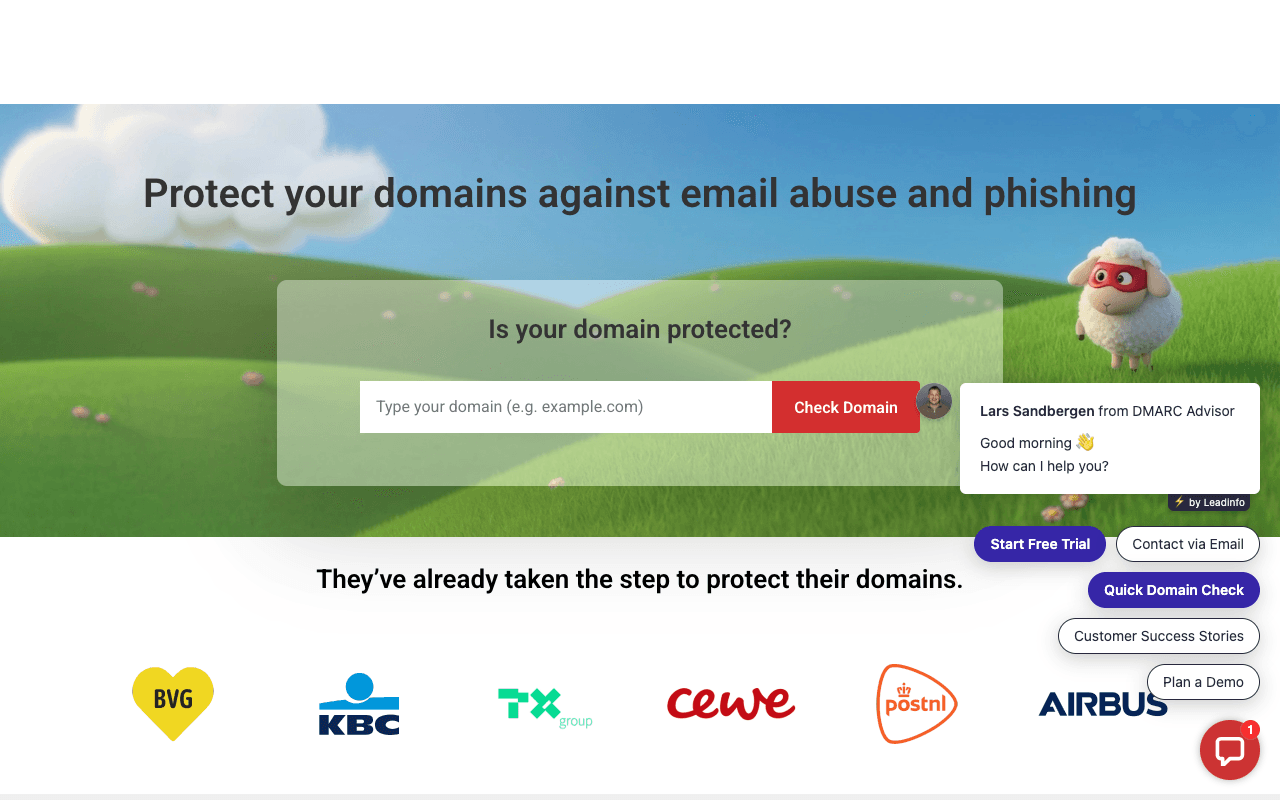
DMARC is the control that stops other people sending mail as you. The hard part is not turning it on, it is the months of moving from monitoring to quarantine to reject without accidentally blocking your own payroll provider, CRM and helpdesk. That transition is what this tool is for.

What It Does

  • DMARC report aggregation across every sending source, in an Easy view and an Expert view, so the same account works for a marketer and for a systems administrator
  • SPF and DKIM management, including a Sender Manager for keeping track of every legitimate third party sending on your behalf
  • Pulse monitoring, alerts and channels for changes to your authentication posture
  • Hosted BIMI service, so the brand logo appears beside your mail in clients that support it
  • Domain groups, workspaces and access controls for agencies or IT teams running many domains
  • Multilingual interface and exportable management reports

Pricing That Starts at Nothing

The Free tier is genuinely free and aimed at individuals and freelancers with personal domains: 2 sending domains, unlimited non-sending domains, 1,000 monthly email volume, one week of history, one user. Basic is €19/month billed annually for small businesses: same 2 sending domains, 100,000 monthly volume, three months of history.

Non-sending domains being unlimited on every tier is the detail that matters. Most organisations own far more parked domains than sending ones, and those parked domains are exactly what gets spoofed. Being able to lock them all down without paying per domain is unusually sensible pricing.

Dutch, and Explicitly Not Global

Published by DMARC Advisor B.V., with a note on the site that is worth quoting because vendors almost never say it:

We would like to clarify that, although we cater for a broad audience, our services are limited to Europe and Africa.

A vendor that limits its own market that way is not chasing US enterprise, and that is a useful signal about who the product is built for.

The company publishes a dedicated GDPR page and a privacy statement, and is straightforwardly Dutch. What is not published is where the platform runs or who its sub-processors are, so this reads PARTIAL with hosting UNKNOWN. For a DMARC tool that is a fair question and not a nitpick: the reports it ingests contain the metadata of every message your domain sends, including the IP addresses of your senders, which is a detailed map of your infrastructure.

Where It Fits

The closest comparison in this directory is Red Sift in the UK, which is bigger and more security-oriented; DMARC Advisor is cheaper and EU-based. Both sit alongside rather than replacing a sending platform. See email deliverability.

Key features include:

  • •DMARC aggregate report parsing with Easy and Expert views
  • •SPF and DKIM record management
  • •Sender Manager for tracking legitimate third-party senders
  • •Pulse monitoring with alerts and notification channels
  • •Hosted BIMI service for verified logo display
  • •Unlimited non-sending domains on every tier, including free
  • •Domain groups, workspaces and access controls for multi-domain estates
  • •Multilingual interface with exportable management reports

Pros

Unlimited non-sending domains on every tier, including the free one, which is where spoofing usually starts

€19/month entry price for a category that is often enterprise-only

Easy and Expert views make one account work for both marketing and IT

Hosted BIMI included rather than sold as a separate product

States openly that it serves Europe and Africa only, which tells you who it is built for

Cons

No hosting country published, for a tool that holds a map of your mail infrastructure

No sub-processor list or DPA located at a public URL

Free and Basic tiers are limited to 2 sending domains

One user on both the free and the entry paid tier

Deliberately does not serve markets outside Europe and Africa

Freemiumfrom €19/moEmail Deliverability
Read more
Salesforge logo

8. Salesforge

Partially Compliant
Salesforge screenshot

Outbound With the Mailbox Layer Attached

Salesforge bundles the sequencer with the infrastructure that keeps it working, which is the direction this whole category has moved: AI-assisted message generation, multichannel sequences across email and LinkedIn, connected mailboxes over IMAP and SMTP, warm-up, and automatic validation of every address you import so invalid ones are blocked before they bounce.

The Fair Use Policy caps a workspace at 99 connected email accounts and reserves the right to pull an account out of warm-up if it starts damaging the pool's reputation, which is a sensible thing to enforce and an honest thing to publish.

Pricing is published, and stated in US dollars.

Why This Listing Is Rated as It Is

The source that prompted this listing places Salesforge in Estonia, and the wider market generally describes it that way.

We read the privacy policy and the terms of service in full. Neither names a legal entity, a registration number, a registered address, or a country. The strongest statement available is this:

Personal data is collected on our website by us, a company registered under EU laws.

That is a claim of EU registration without an entity to check it against. Compare it with Dolist, whose page carries share capital, RCS number, SIREN, VAT number, APE code and the name of the publication director; or Mailrelay, which publishes its NIF. Those took one page each to verify.

So this listing records the country as not disclosed. It is not an accusation of anything, and Salesforge may well be exactly the Estonian company everyone says it is. It is a statement about what the vendor has published, and for a directory whose entire premise is that European ownership is checked rather than assumed, a vendor that does not name itself cannot be recorded as European. Rybbit is listed the same way for the same reason.

What Else Is Missing, and What Is Known

The terms confirm that Salesforge uses Amazon Web Services in the operation of the service, and that it obtains access to your connected email account in order to send and to check for replies. Stripe handles payments and Cloudflare Turnstile protects the forms. No hosting region is stated anywhere, and no sub-processor list or DPA was located at a public URL.

Between the AWS dependency, the unstated hosting region, and the absence of an identifiable entity, this row reads PARTIAL with exposure US CLOUD Act.

Note the same controller point that applies to PhantomBuster: the prospects you contact through a cold outreach tool are people whose data you control, and your Article 6 and Article 14 obligations toward them are yours regardless of where the vendor is registered.

Where It Fits

Against lemlist and Woodpecker, both of which publish who they are. If the ownership question matters to you, start with those. See sales prospecting.

Key features include:

  • •AI-assisted cold email generation and sequencing
  • •Multichannel outreach across email and LinkedIn
  • •Connected mailboxes over custom IMAP and SMTP
  • •Automated mailbox warm-up with reputation protection
  • •Automatic email validation blocking invalid addresses on import
  • •Workspace and sub-account separation for agencies
  • •Up to 99 connected email accounts per workspace
  • •Reply detection and inbox monitoring

Pros

Sequencer, mailbox management and warm-up in one product rather than three

Automatic validation of imported addresses protects sender reputation by default

Sub-accounts make it workable for an agency running client outreach

Publishes its Fair Use Policy, including the right to remove an account from warm-up

Published pricing, so it can be evaluated without a sales call

Cons

Names no legal entity, registration number, address or country in its privacy policy or terms

No hosting region stated anywhere, and the terms confirm AWS is used

No sub-processor list or DPA located at a public URL

Requires access to your connected email account to send and read replies

Priced in US dollars despite claiming EU registration

Read more
Red Sift logo

9. Red Sift

Partially Compliant
Red Sift screenshot

Email Authentication, From the Security Side

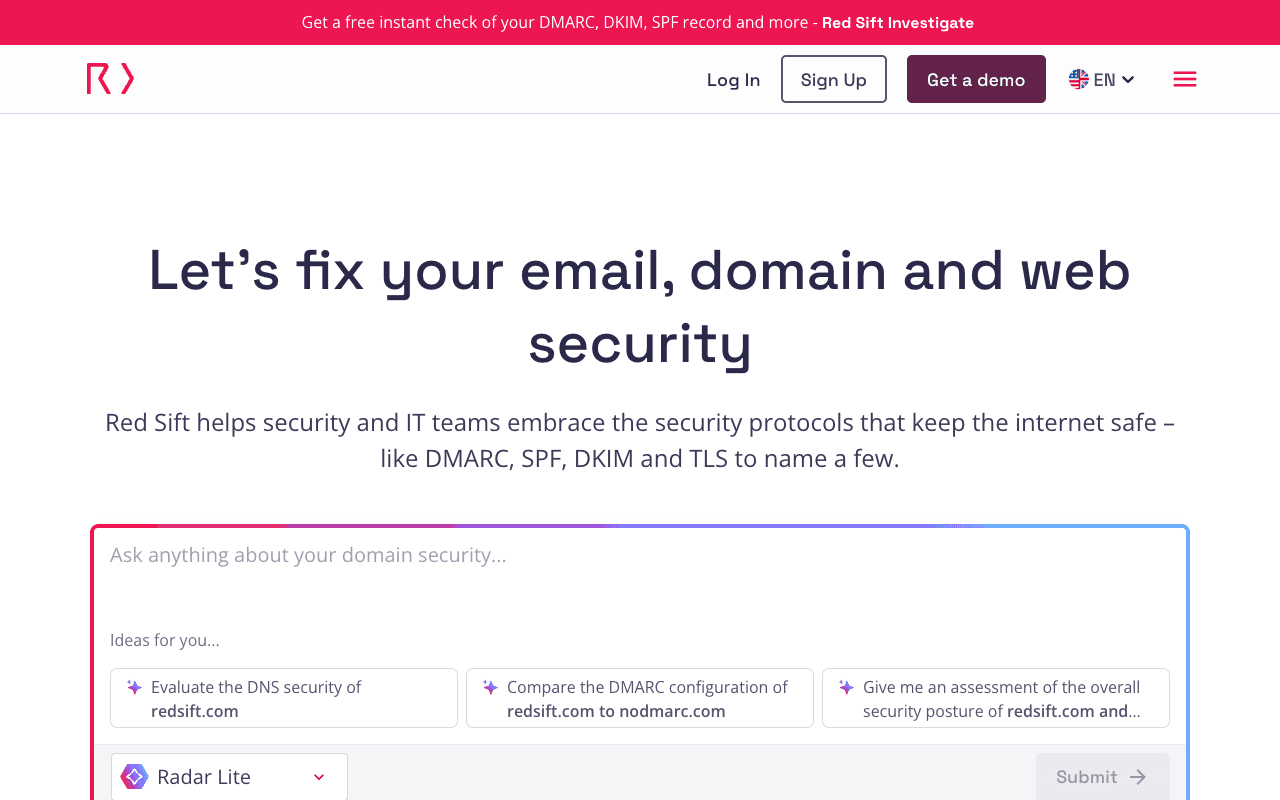
Red Sift approaches the same problem as DMARC Advisor from a different direction. Where DMARC Advisor is a focused reporting and management tool with a €19 entry price, Red Sift is a broader domain security suite: DMARC and authentication, yes, but also BIMI, certificate lifecycle monitoring, and discovery of the domains and assets an organisation did not know it had.

That makes it a purchase a security team signs off on rather than a marketing tool, and it prices accordingly.

Why Marketers End Up Here Anyway

Email authentication is one of the few places where marketing and security genuinely share a control. Get DMARC wrong and campaigns stop arriving; get it right and both deliverability and spoofing protection improve at once. Since Google and Yahoo tightened bulk sender requirements, this stopped being optional for anyone sending at volume.

The Data Position, Stated Plainly

Published by Redsift Limited. The privacy policy is unambiguous about international transfers:

We may transfer your Personal Data to countries or territories whose laws have not been deemed to provide such an adequate level of protection (e.g., the United States).

It relies on adequacy decisions and frameworks including the EU-U.S. Data Privacy Framework and the UK Extension where they apply, and notes that in limited circumstances it may rely on a derogation such as explicit consent where neither an adequacy decision nor appropriate safeguards are available.

That last point deserves attention. Derogations under Article 49 are meant to be exceptional and occasional, not a standing transfer mechanism, and a vendor that flags it is telling you something about the shape of its data flows. Read together with the US transfers, this is a platform that does not keep your data in Europe, and does not claim to.

No hosting region is stated, and no sub-processor list or DPA was located at a public URL. The policy also carries an unusual disclaimer: "as our Site and Platform are hosted electronically, we can make no guarantees as to the security or privacy of your information."

The Fair Comparison

If you want DMARC management with the data staying in the EU, DMARC Advisor is the Dutch answer and it starts at €19 a month. If you need certificate management, attack-surface discovery and a security-grade platform, Red Sift covers ground DMARC Advisor does not, and you accept US processing to get it. Both are legitimate choices; this directory's job is making sure you know which one you are making. See email deliverability.

Key features include:

  • •DMARC deployment, monitoring and reporting
  • •SPF and DKIM management
  • •BIMI configuration and logo verification
  • •Certificate lifecycle monitoring
  • •Attack surface and domain discovery
  • •Alerting on authentication and certificate changes
  • •Reporting for security and marketing stakeholders
  • •Enterprise-grade access controls

Pros

Covers ground a pure DMARC tool does not: certificates, attack surface, domain discovery

Built to a security-team standard rather than a marketing-tool standard

Explicit and honest about transferring data outside adequate jurisdictions

Addresses the deliverability control that Google and Yahoo bulk sender rules made mandatory

Established platform with enterprise deployment experience

Cons

States that it transfers personal data to countries without adequacy, naming the United States

Discloses reliance on Article 49 derogations, which are meant to be exceptional rather than routine

No hosting region, sub-processor list or DPA published

Security-suite pricing rather than a marketing-tool price point

The policy disclaims guarantees about the security or privacy of your information

Read more

Why consider a European alternative to SendGrid?

SendGrid is headquartered outside the EU, which means it operates under a different legal framework. For EU-regulated businesses, this raises practical considerations around data jurisdiction and regulatory compliance.

The Schrems II ruling invalidated the EU-US Privacy Shield, and data transfers to non-EU companies remain legally complex. Tools based outside the EU may also be subject to foreign surveillance laws or policy changes that are beyond your control.

The alternatives listed above are all built and headquartered in Europe, with data processing within the EU and GDPR compliance built in from the ground up.

Frequently Asked Questions

Why look for European alternatives to SendGrid?

European businesses face increasing pressure to ensure their tools comply with GDPR and keep data within the EU. Using non-European tools can expose your organisation to Schrems II risks, foreign surveillance laws, and the possibility that geopolitical shifts could disrupt access to tools you depend on. European alternatives eliminate these risks entirely.

Is SendGrid GDPR compliant?

SendGrid is headquartered outside the EU, so it operates under non-EU jurisdiction. It offers a Data Processing Agreement and GDPR (DSGVO) features, but transferring EU personal data to it still carries Schrems II considerations and exposure to foreign access laws. If full GDPR/DSGVO compliance with EU data residency is a priority, the European alternatives above keep your data under EU jurisdiction by default.

Are these alternatives fully GDPR compliant?

Each tool listed has been reviewed for GDPR compliance. Check the compliance badge and comparison table for each tool. Tools marked as "GDPR Compliant" have been verified to meet all major requirements including DPA availability and EU data hosting.

Can I self-host any of these alternatives?

Some of the listed tools offer self-hosted or on-premise options, giving you full control over where your data is stored. Check each tool's individual page for details on hosting options.

How do the prices compare to SendGrid?

Many European alternatives offer competitive pricing, and several include free tiers or open-source options. See each tool above for pricing details.

What does "Schrems II Risk" mean?

The Schrems II ruling by the EU Court of Justice invalidated the EU-US Privacy Shield. Tools with "Low" Schrems II risk keep all data within the EU, while tools with "High" risk may transfer data to jurisdictions without adequate protections.